Honeywell BMS and EMS at the Regza (Hisense) Factory
In March 2025, CAD delivered, configured and handed over the technical control and monitoring system for the Regza factory, part of the Hisense Group. The project used Honeywell DDC (Direct Digital Control) panels with centralized monitoring software to implement a Building Management System (BMS) and an Energy Management System (EMS).
Key points
- Solution: Honeywell DDC cabinet integrated with building management and energy monitoring software.
- The DDC cabinets sit in the central technical room and connect to field devices over BACnet/Modbus.
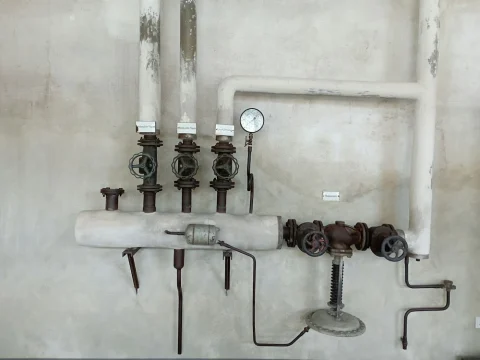
- The BMS monitors and controls HVAC, lighting, elevators, security, fire protection, valves and other electrical systems.
- The EMS tracks electricity consumption in real time and exports PDF and Excel reports.
System objectives
The system provides centralized monitoring, flexible control and early warnings for the plant’s critical technical infrastructure. It also tracks and analyzes energy consumption to help optimize operations and reduce energy waste.
Honeywell DDC cabinet: the control center
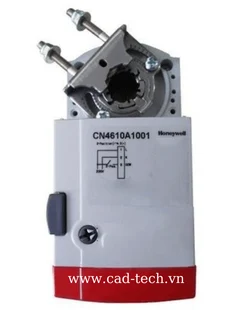
CAD deployed Honeywell DDC cabinets capable of continuous data acquisition, signal processing and local equipment control. They are installed in the central technical room and connected to field devices via industrial communication protocols (BACnet/Modbus). The system is scalable, so the factory can extend coverage as new equipment or areas are added.
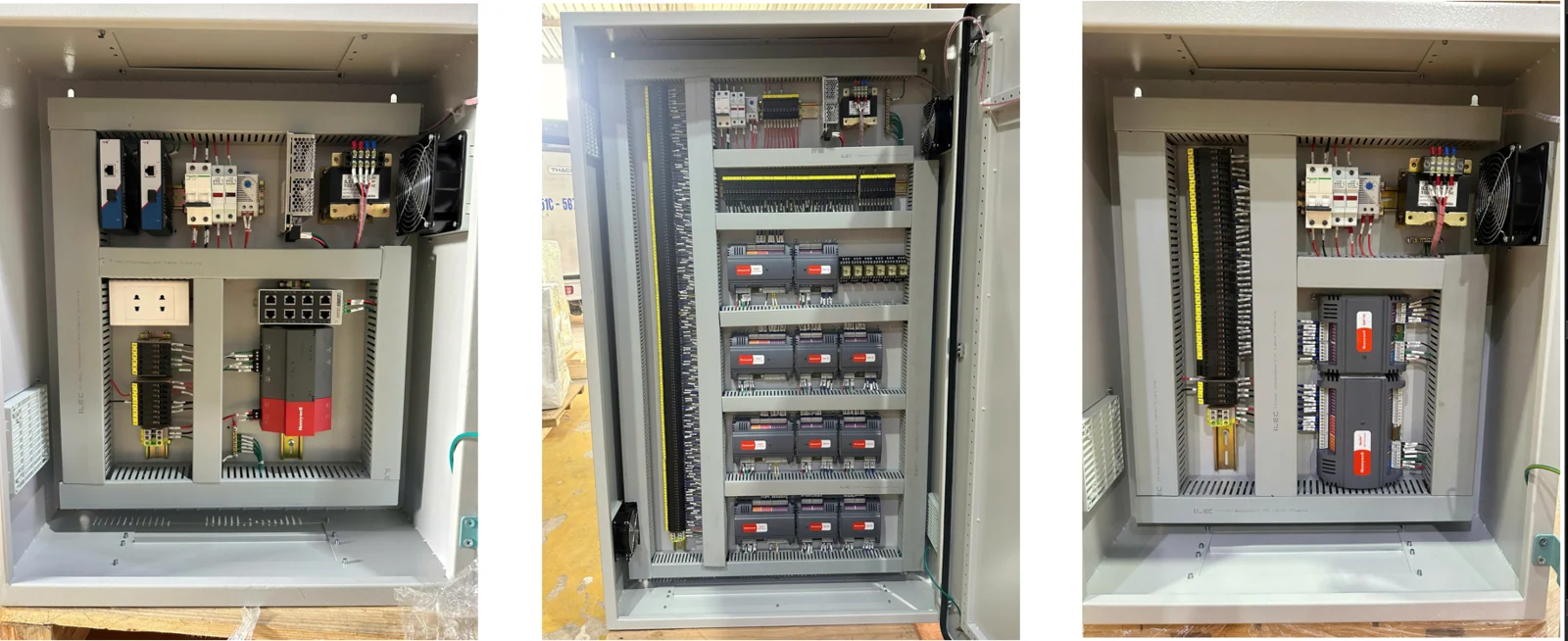
DDC cabinet installed on site
BMS: building management system
The BMS deployed by CAD is the central hub for monitoring and controlling all technical systems in the facility, including HVAC, lighting, elevators, security, fire protection, valves and other electrical systems.
The user interface shows real-time equipment status and spatial layout through animated icons, color-coded alerts and floor plans per area or zone.
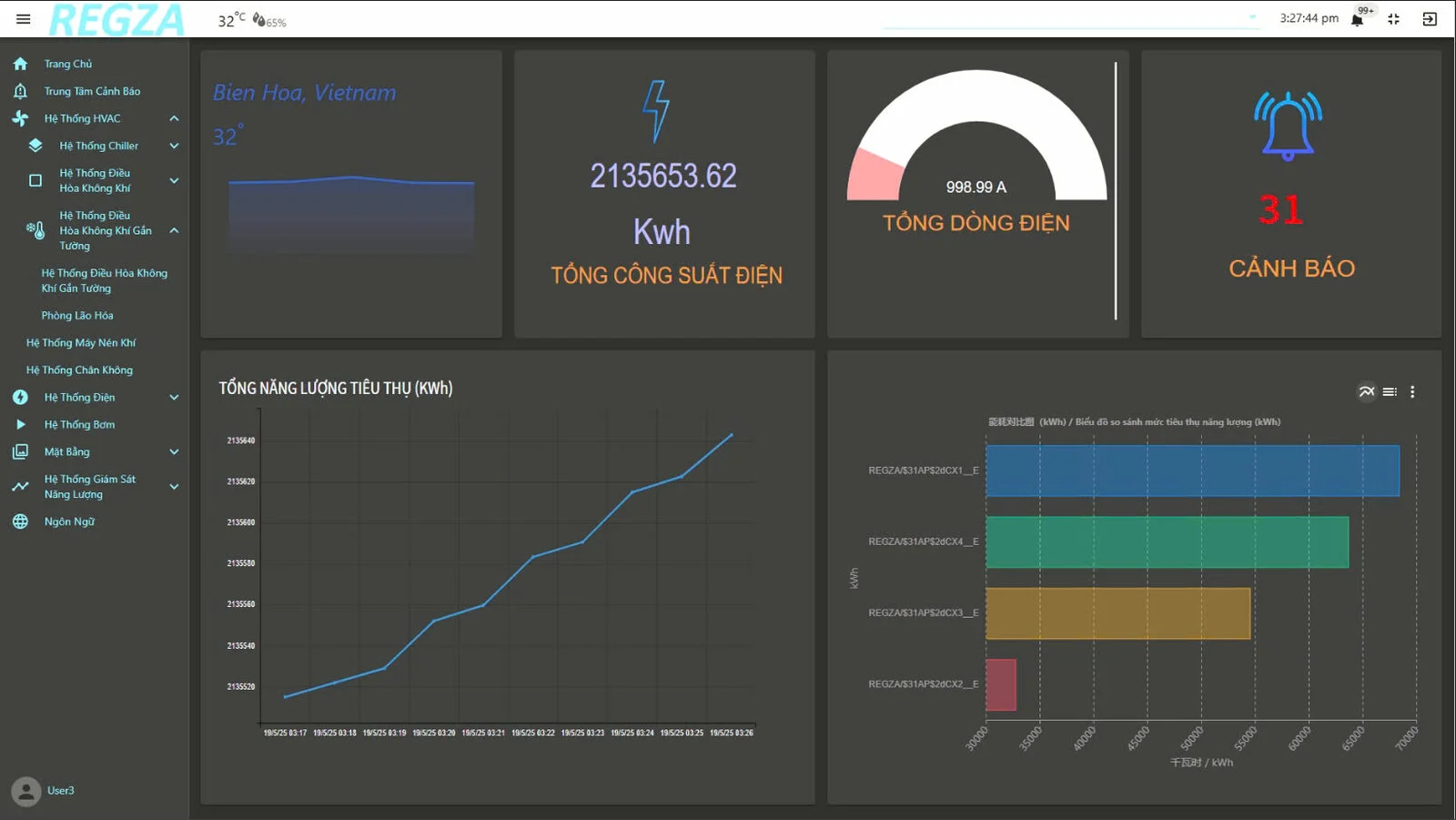
BMS dashboard
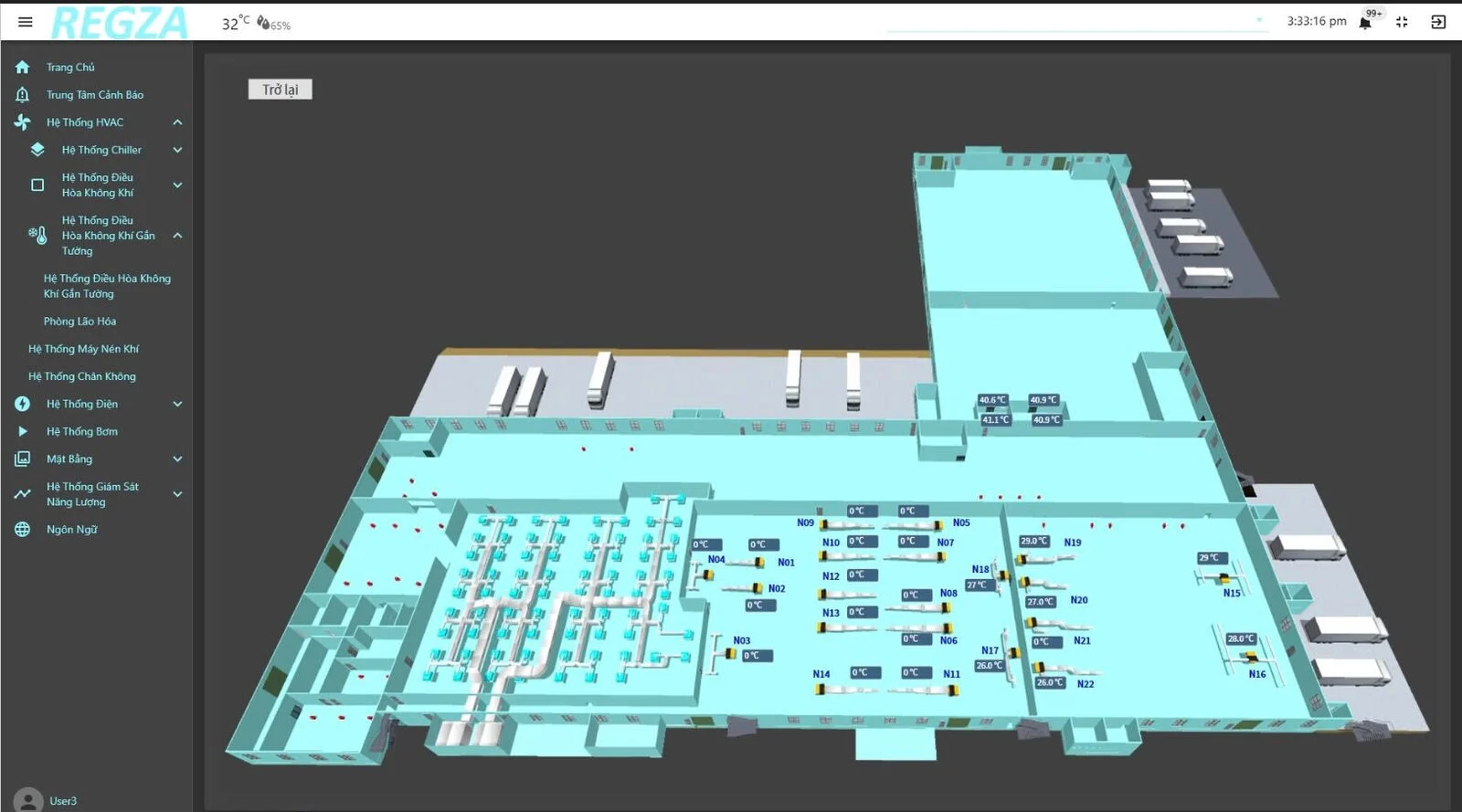
FCU layout interface
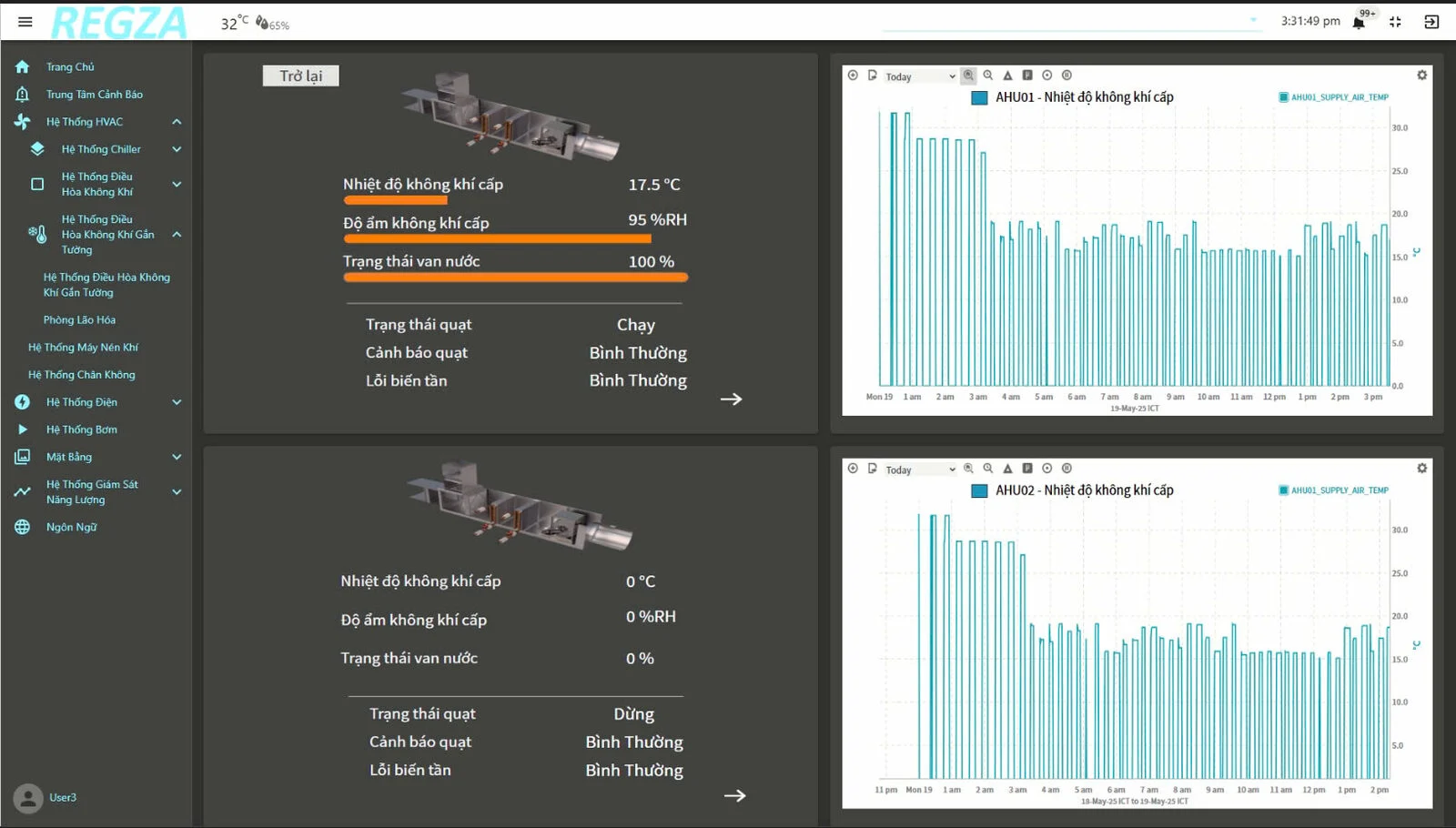
AHU monitoring
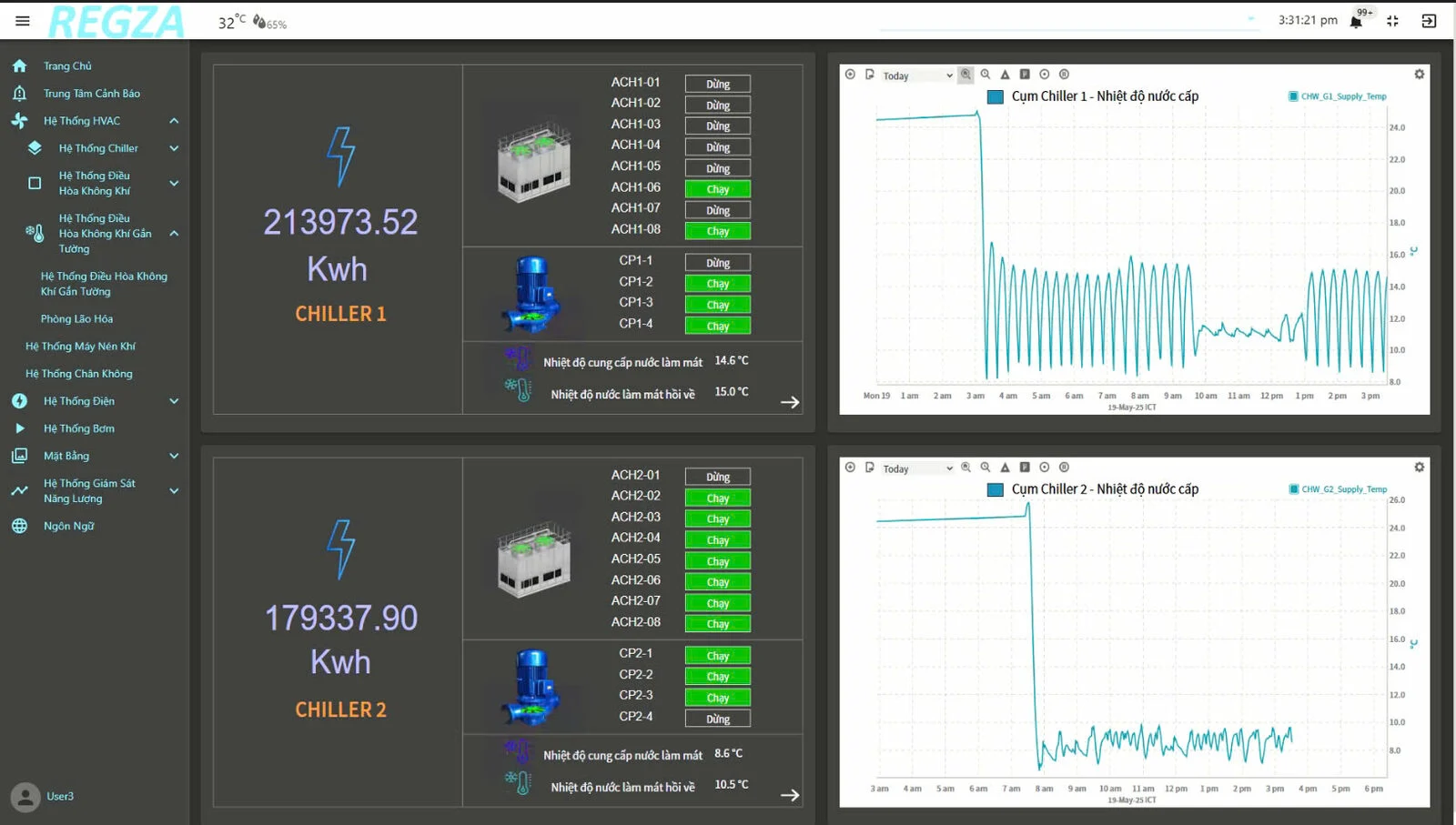
Chiller control
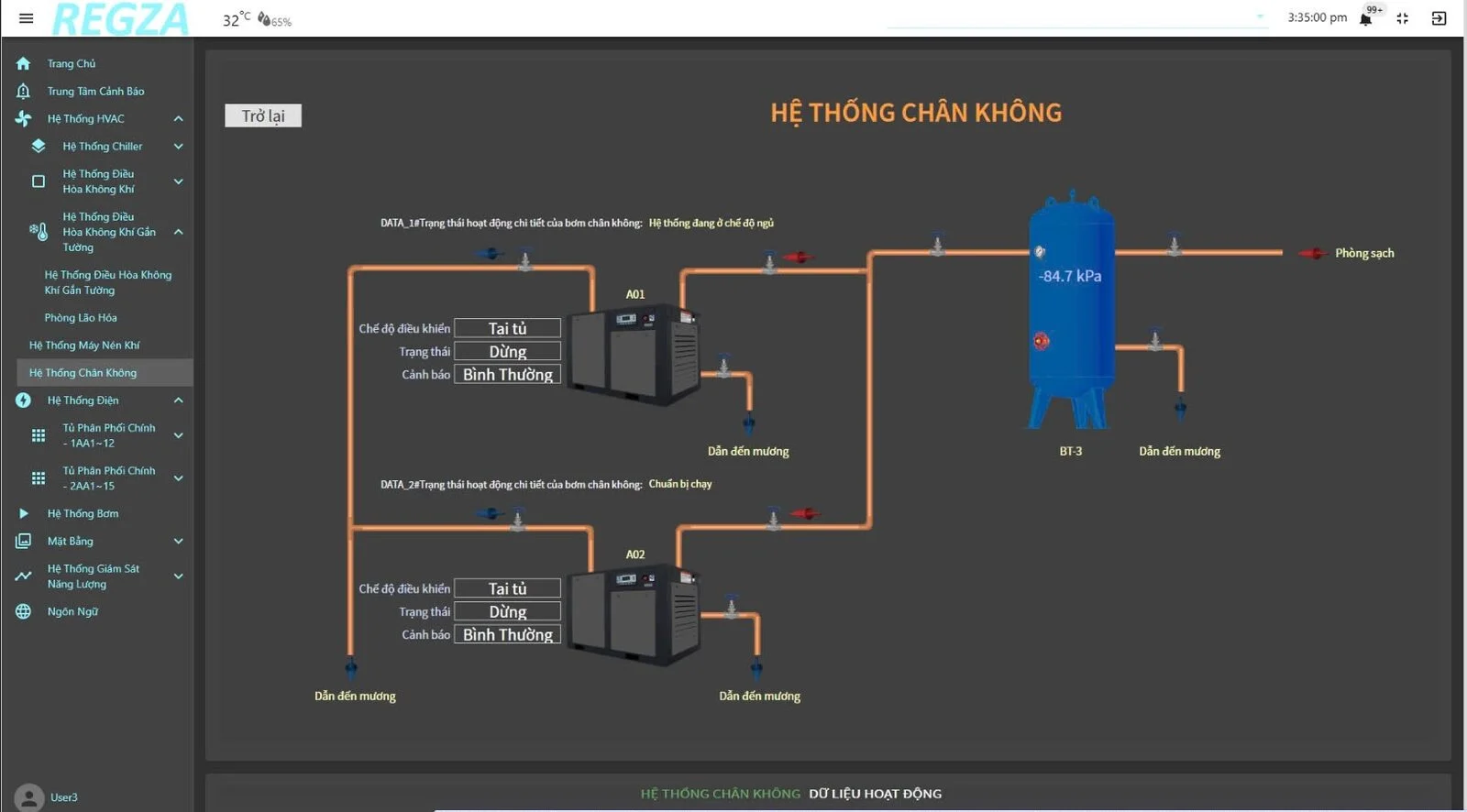
Vacuum system
Role-based access lets administrators, technicians and energy supervisors use only the parts of the system relevant to them. The system also logs all events and raises alerts for abnormal conditions such as overheating, signal loss or device malfunctions.
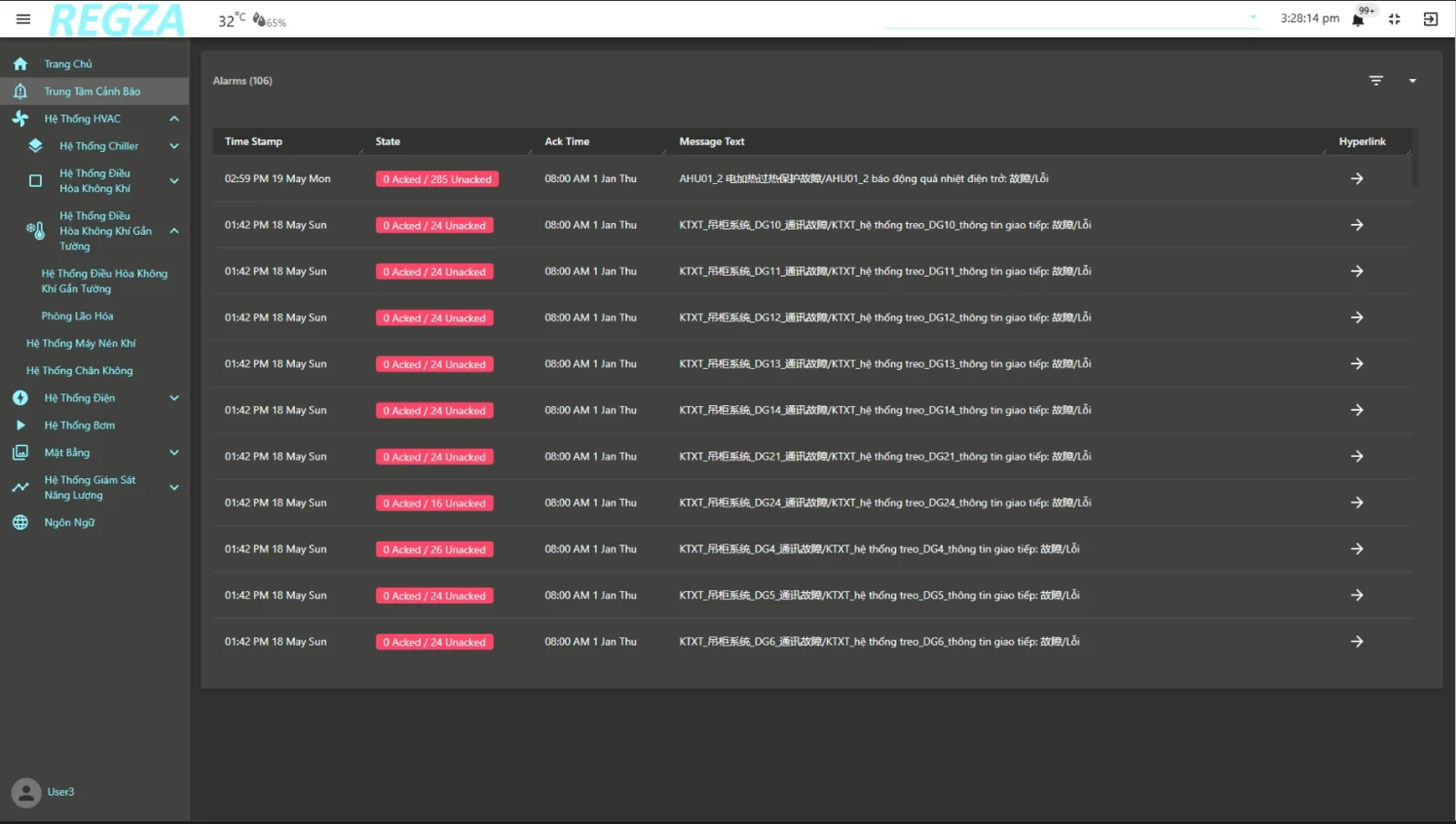
Real-time alarm
EMS: energy management system
The EMS monitors electricity consumption across the plant in real time. Data from electrical panels, CTs and energy meters is shown in summary tables, bar graphs and line charts.
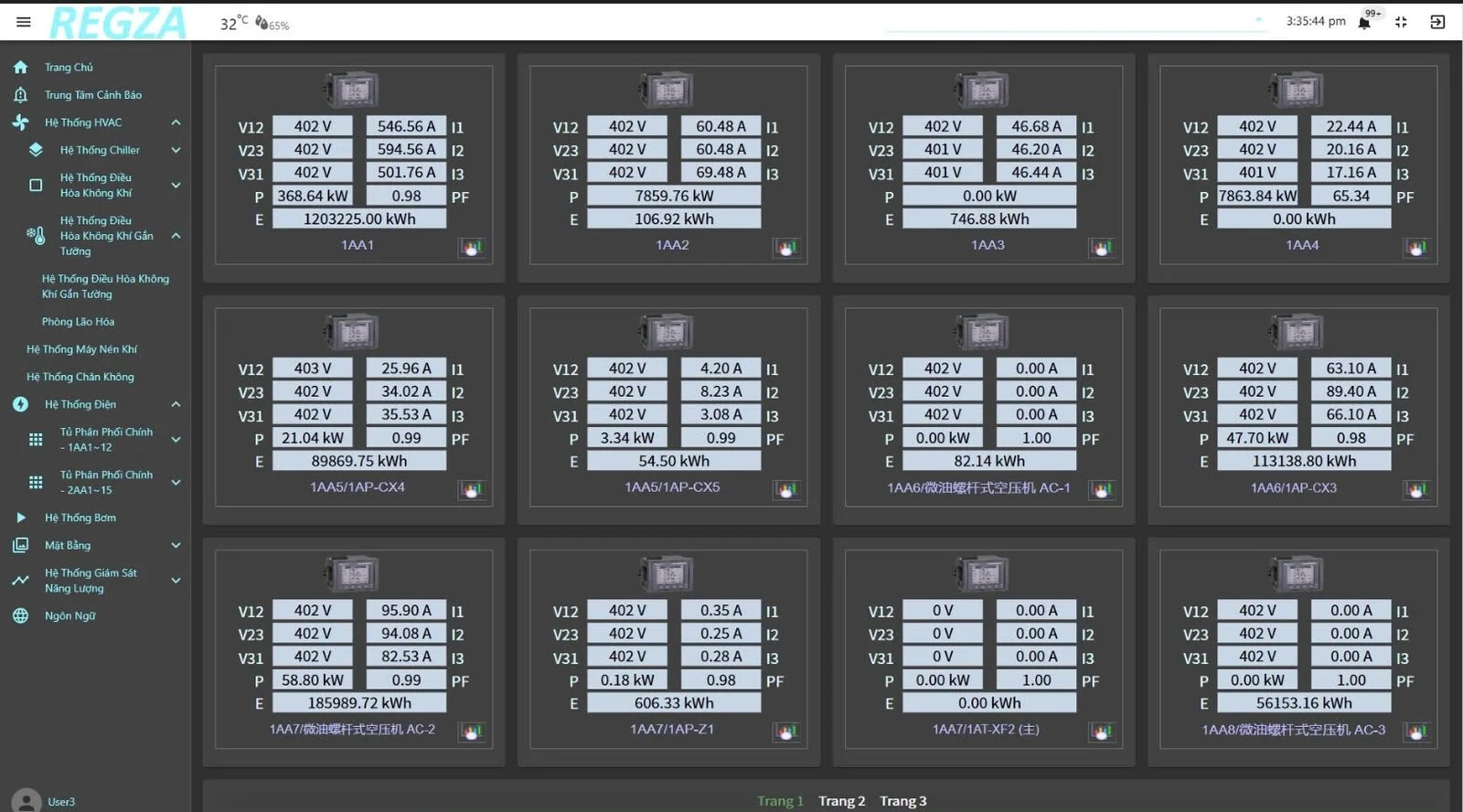
EMS interface
Key features of the EMS software:
- Compare energy usage by area, electrical panel or production shift.
- Analyze trends over days, weeks or custom time ranges.
- Detect anomalies early (for example overcurrent or phase loss) to minimize risk and prevent energy loss.
- Export periodic reports (PDF, Excel) for internal management or energy audits.
Key benefits
According to the original article, the BMS and EMS integration gives Regza:
- Less time spent on manual system checks.
- Improved reliability of technical systems.
- Early detection of issues to minimize machine downtime.
- More efficient energy usage and lower cost.
- A step toward Smart Factory transformation.
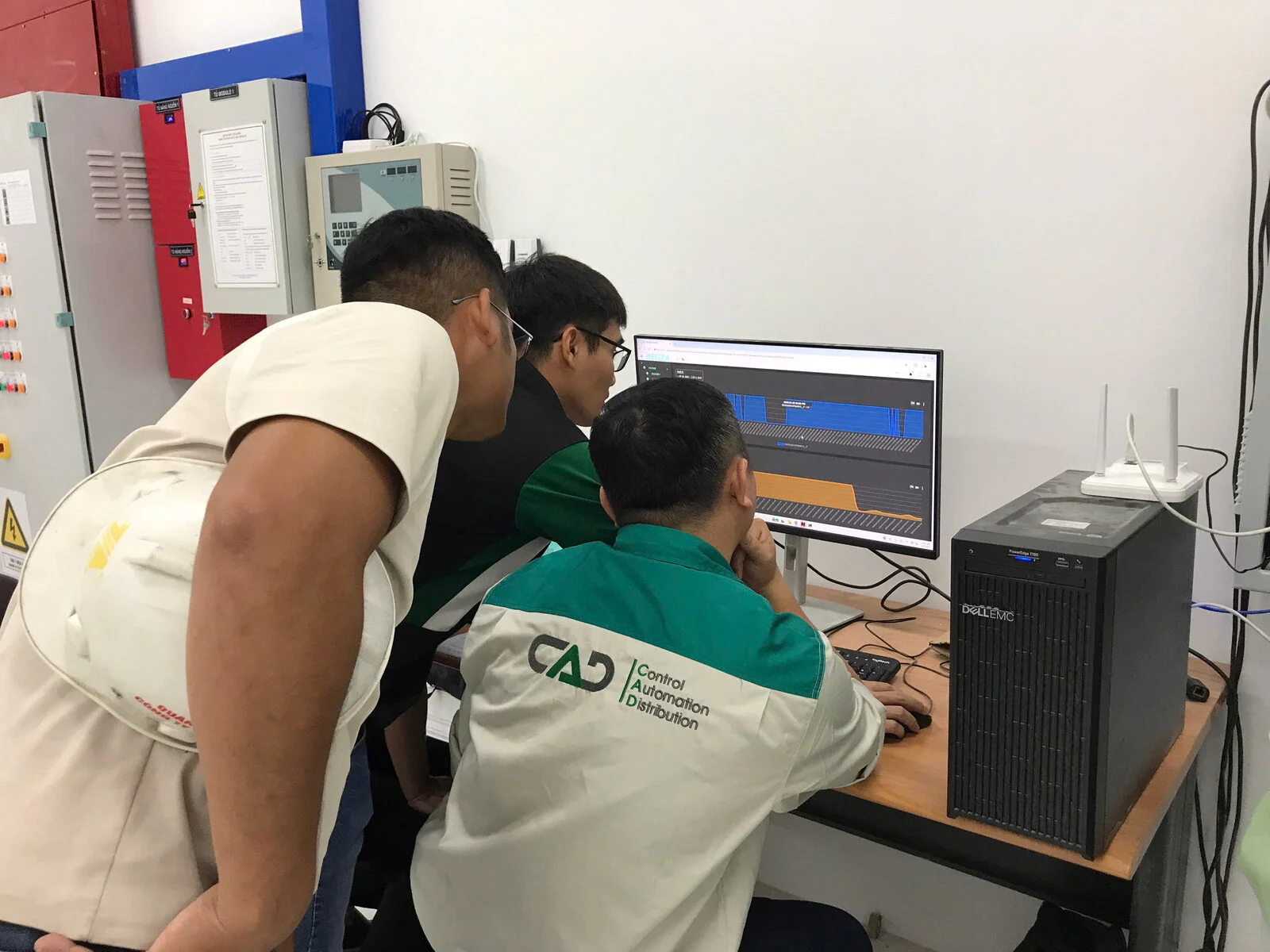
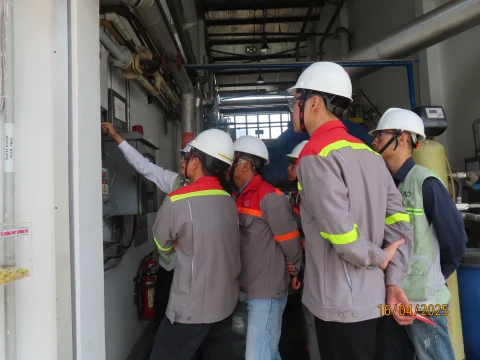
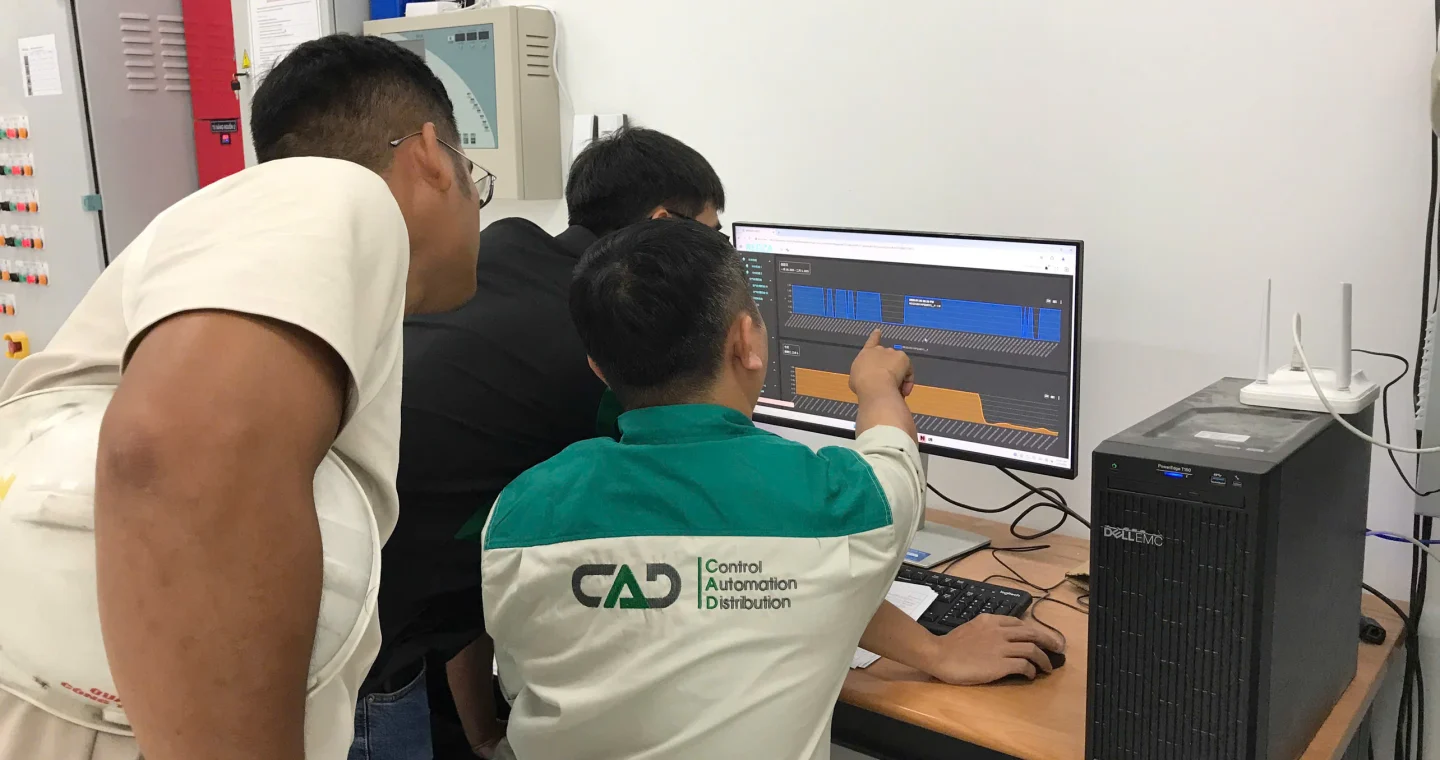
CAD engineering team training factory staff on system operation
Frequently asked questions
What control hardware does the Regza BMS and EMS use?
The project uses Honeywell DDC control cabinets with centralized monitoring software. The cabinets connect to field devices over BACnet/Modbus.
Which technical systems does the BMS monitor?
The BMS monitors and controls HVAC, lighting, elevators, security, fire protection, valves and other electrical systems.
What can the EMS software do?
The EMS compares energy use by area, panel or production shift, analyzes trends, detects anomalies such as overcurrent or phase loss, and exports PDF and Excel reports.