Flow Control
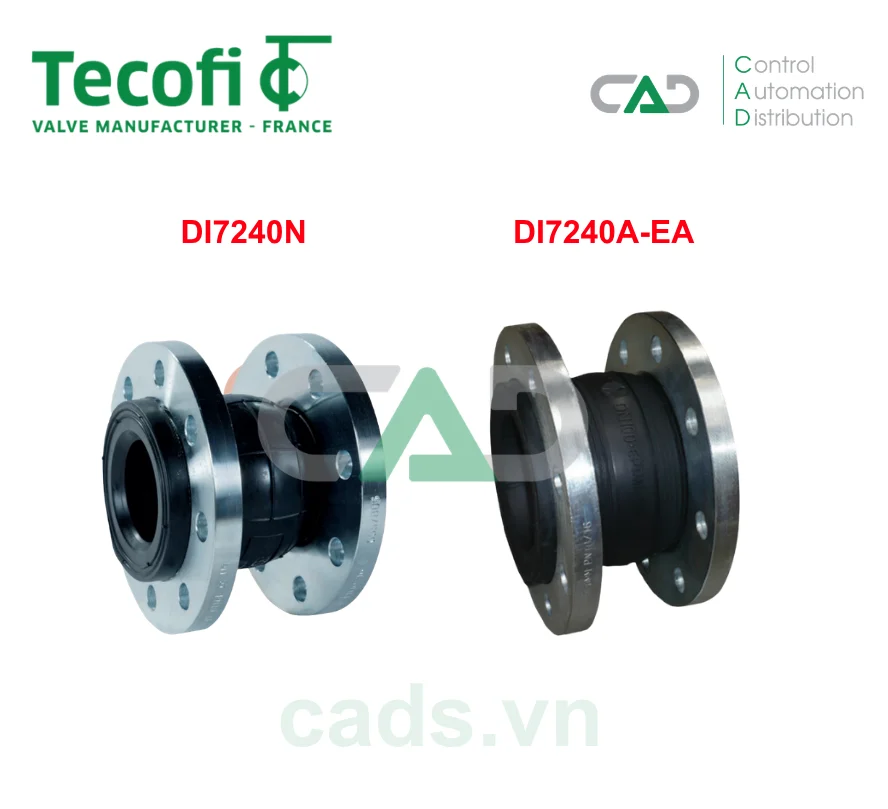
Tecofi DI7240N / DI7240A-EA Flexible Rubber Connector
Code: DI7240N / DI7240A-EA
Quote & DatasheetGENUINE EQUIPMENT
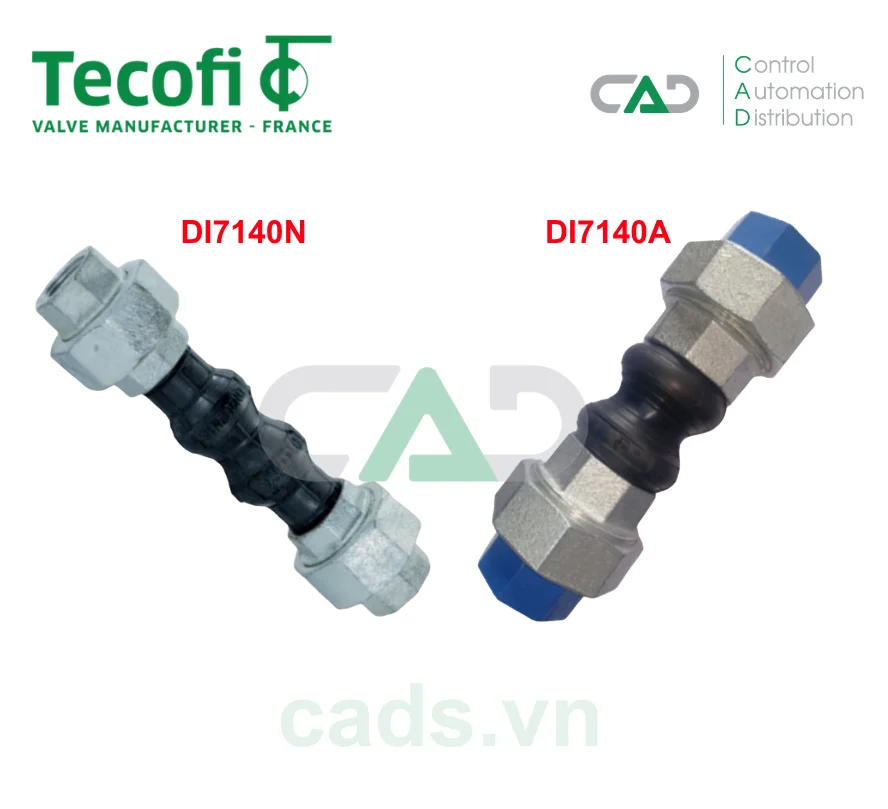
Tecofi EPDM flexible joints: DI7140N and DI7140A with BSP threads, DI7240N and DI7240A-EA with loose PN10/16 flanges, 16 bar. CAD supplies datasheets, CO/CQ and advice matched to your pipework.
Code: DI7240N / DI7240A-EA
Quote & DatasheetCode: DI7140N / DI7140A
Quote & DatasheetShowing 1–2 of 2 items
A rubber flexible joint absorbs vibration, thermal expansion and small misalignment in pipework and is usually fitted after a pump or where a pipe meets equipment. Tecofi lists DI7140N (3-piece union, zinc-plated cast-iron ends) and DI7140A (BSP threads, ACS epoxy-coated ends) for small sizes, and DI7240N and DI7240A-EA with loose PN10 or PN16 flanges; EPDM rubber sleeve, 16 bar, -30°C to +120°C.
| Model | Connection | Sleeve | Pressure | Working temperature |
|---|---|---|---|---|
| DI7140N | 3-piece union, BSP female, zinc-plated cast-iron ends | EPDM rubber | 16 bar | -30°C to +120°C |
| DI7140A | BSP female, ACS epoxy-coated ends | EPDM ACS rubber | 16 bar | -30°C to +120°C |
| DI7240N | Loose zinc-plated steel PN10/16 flanges | EPDM rubber | 16 bar | -30°C to +120°C |
| DI7240A-EA | Loose PN10 or PN16 flanges | EPDM ACS rubber | 16 bar | -30°C to +120°C |
Brands listed here: Tecofi. CAD sends datasheets, size tables and CO/CQ. Further reading: Flexible joints BE, EE, BB, BF, FF: how to tell them apart.
See also: Industrial valves, Water and HVAC valves, Y-strainers, Air release valves.
Usually right after a pump and where a pipe meets vibrating or expanding equipment; a CAD engineer can advise on position and type from your pipework layout.
The DN, pressure, temperature, medium and connection type (threaded or flanged).