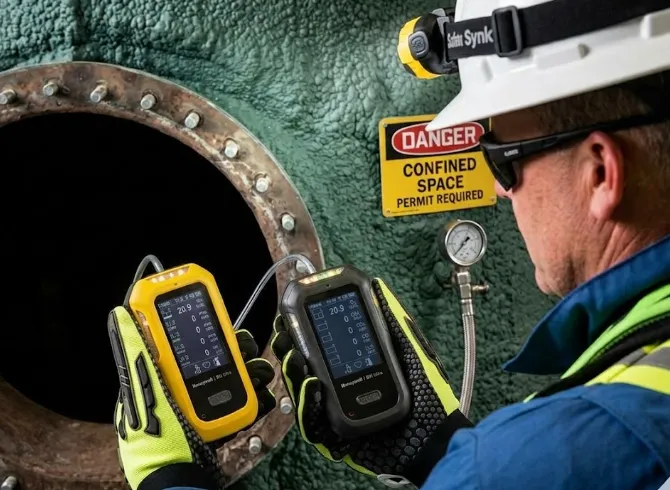
How to Choose a Portable Gas Detector: 6 Steps

Choose a portable gas detector in this order: the hazardous gases at your workplace (from a risk assessment), single-gas or multi-gas, diffusion or pumped sampling, environment and hazardous-area approvals, and then battery life, alarms and calibration. Confined-space work usually calls for a multi-gas detector with a pump; if there is only one clear hazard, a single-gas detector is enough.
Step 1: identify the gases to measure
A risk assessment is the starting point: it shows which gases, vapours or oxygen deficiency may be present and where they come from. See How to Choose the Right Gas Detection Solution. The usual four gases in confined spaces are H2S, CO, O2 and combustible gas (%LEL). For specific toxic gases (NH3, Cl2, HCN, PH3 and others) or VOCs, pick a detector that lets you change to the right sensor. Oxygen can be both deficient and enriched (above about 23.5% it increases the ignition risk of clothing and materials); see oxygen deficiency and enrichment.
Step 2: single-gas or multi-gas
If there is only one clear hazard, a single-gas detector is enough and compact. For confined-space entry, use a multi-gas detector to watch several hazards at once. Portable detectors are generally treated as personal protective equipment that monitors the operator’s breathing zone, complementing fixed gas detection; see Portable Gas Detectors: Role and When to Use Them. For a plant-wide layout of detectors and control panels, see Industrial Gas Detection Systems.
Step 3: diffusion or pumped
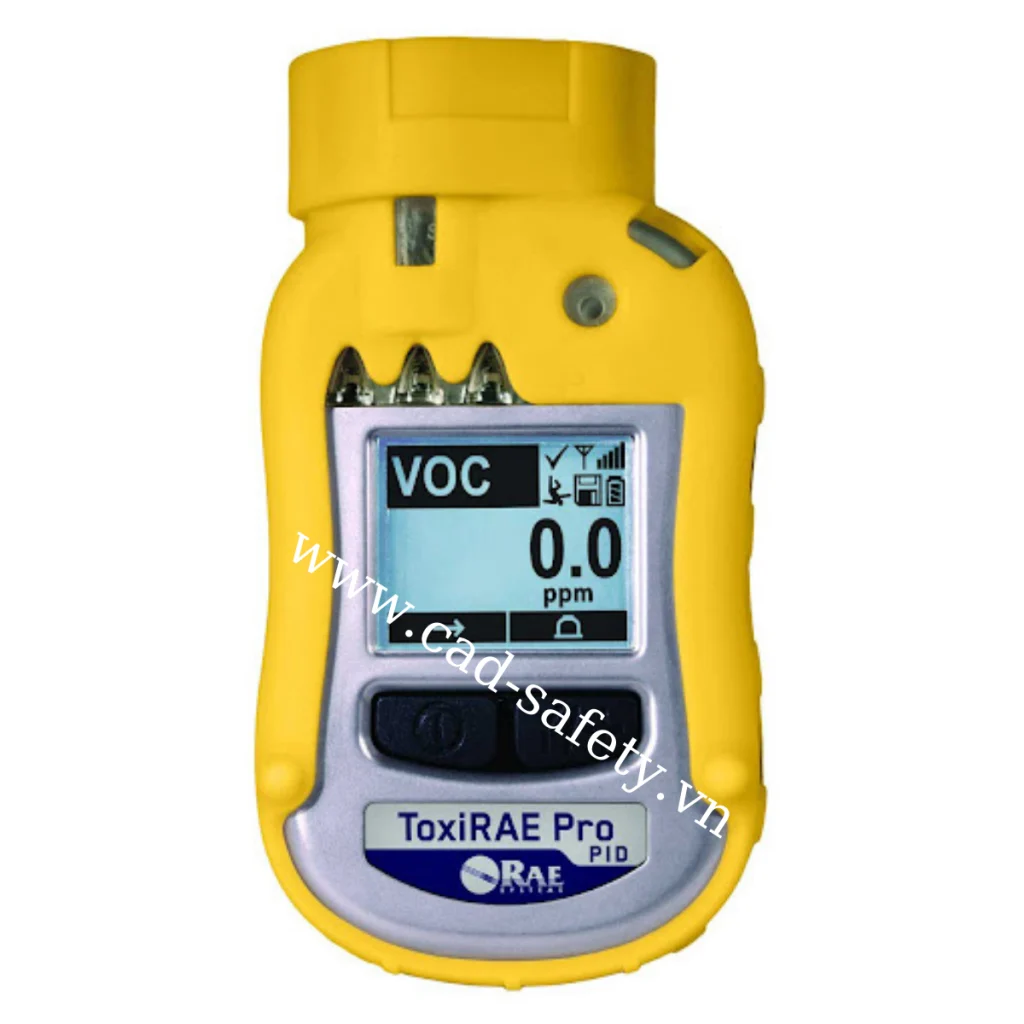
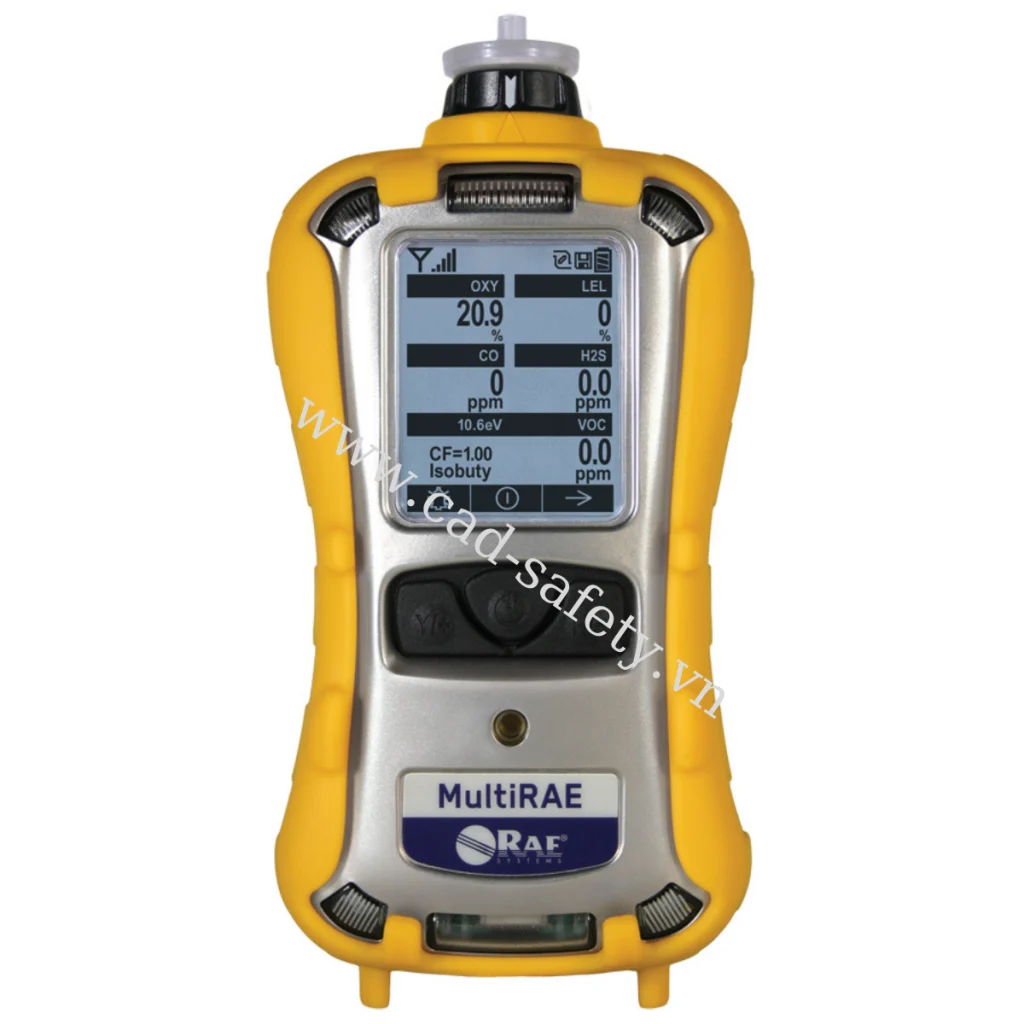
A diffusion detector measures gas where the gas reaches its sensor. A pumped detector draws a sample through a tube, which suits confined spaces because you can test before anyone enters. The Honeywell BW Max XT II has a pump and samples from up to 23 m. The MultiRAE Pro has a built-in pump with an average flow of 250 cc/min. The ToxiRAE Pro samples by diffusion.
Step 4: environment and approvals
- Temperature and humidity: the BW Max XT II works from -20°C to 50°C at 10 to 100% RH non-condensing; the ToxiRAE Pro from -20°C to 55°C at 0 to 95% RH.
- Ingress protection: IP66/67 (BW Max XT II), IP-65 (ToxiRAE Pro, MultiRAE Pro).
- Hazardous areas: these detectors carry Ex approvals (ATEX, IECEx, CSA/UL depending on the model); send us the zone classification of your area and we will check it against the datasheet.
- Sensor technology: catalytic sensors for combustible gas need more frequent maintenance, whereas NDIR infrared solutions usually cost more up front but need less upkeep; the MultiRAE Pro offers both, plus a PID sensor for VOCs.
The models CAD supplies compared
| Model | Gases | Sampling | Highlights per manufacturer |
|---|---|---|---|
| Honeywell BW Max XT II | H2S 0-200 ppm, CO 0-1000 ppm, O2 0-30% vol, %LEL 0-100% | Pump, up to 23 m | One-button operation; typical battery life 13 hours at 0°C; IP66/67; compatible with MicroDock II for automatic testing and calibration |
| RAE Systems ToxiRAE Pro | Single gas, more than 20 swappable electrochemical sensors (CO, H2S, NH3, Cl2, O2 and more) | Diffusion | More than 30 hours of battery life; 3 months of data logging; Man Down Alarm; automatic testing and calibration with AutoRAE 2 |
| RAE Systems MultiRAE Pro | Multi-gas, more than 25 sensors (PID, catalytic, NDIR, electrochemical, gamma) | Built-in pump, 250 cc/min | Up to 6 threat types at once; about 12 hours of battery (18 hours extended); optional wireless remote alarm |
Step 5: alarms, battery and data
Look for audible, visual and vibrating alarms (the BW Max XT II offers a 95 dB audible alarm and Low, High, TWA and STEL setpoints). Size the battery to your shift. For people working alone, the Man Down Alarm on the RAE models sends a local and remote alert; see What Is a Man Down Alarm and How It Works.
Step 6: plan for calibration
Gas detectors need regular bump tests and calibration following the manufacturer’s instructions. Catalytic sensors can degrade after exposure to poisons; see Why Gas Detector Calibration Matters. CAD advises on model selection, supplies CO/CQ documentation, and offers calibration services and technical support. Browse the full portable gas detector group from Honeywell and RAE Systems.
What to send CAD for a quotation
- The gases to be measured and the range (ppm, %LEL or %vol).
- Where it will be used: confined space, plant, outdoors; temperature and humidity.
- Hazardous-area zone and approvals required (ATEX, IECEx and so on).
- Diffusion or pumped sampling, and sampling tube length if needed.
- Number of detectors and hours of use per shift.
- Need for a test and calibration station, calibration gas, wireless alarms or Man Down.
Send the model or specification and CAD will quote within 24 working hours.
Frequently asked questions
Single-gas or multi-gas?
If there is one clear hazard a single-gas detector is enough; for confined-space entry use a multi-gas detector.
Does a gas detector need calibration?
Yes. Regular bump tests and periodic calibration following the manufacturer's instructions are needed to keep readings accurate.
How does a pumped detector differ from a diffusion detector?
A pumped detector draws the sample through a tube, so you can test before entering; a diffusion detector only measures gas at its own position.
Can a portable detector replace fixed detectors?
Not entirely. A fixed detector watches one location, while a portable one moves with the operator. Many sites use both.